Researcher · Author · Keynote speaker
How can two intelligent people look at the same information and come away with completely different conclusions?
Dr Michelle Joosse explores how our thinking, identity and digital environments shape what we believe, what we trust and the decisions we make.
Information has never been more abundant, yet knowing what to trust can feel harder than ever.
The book
What if better information is not enough?
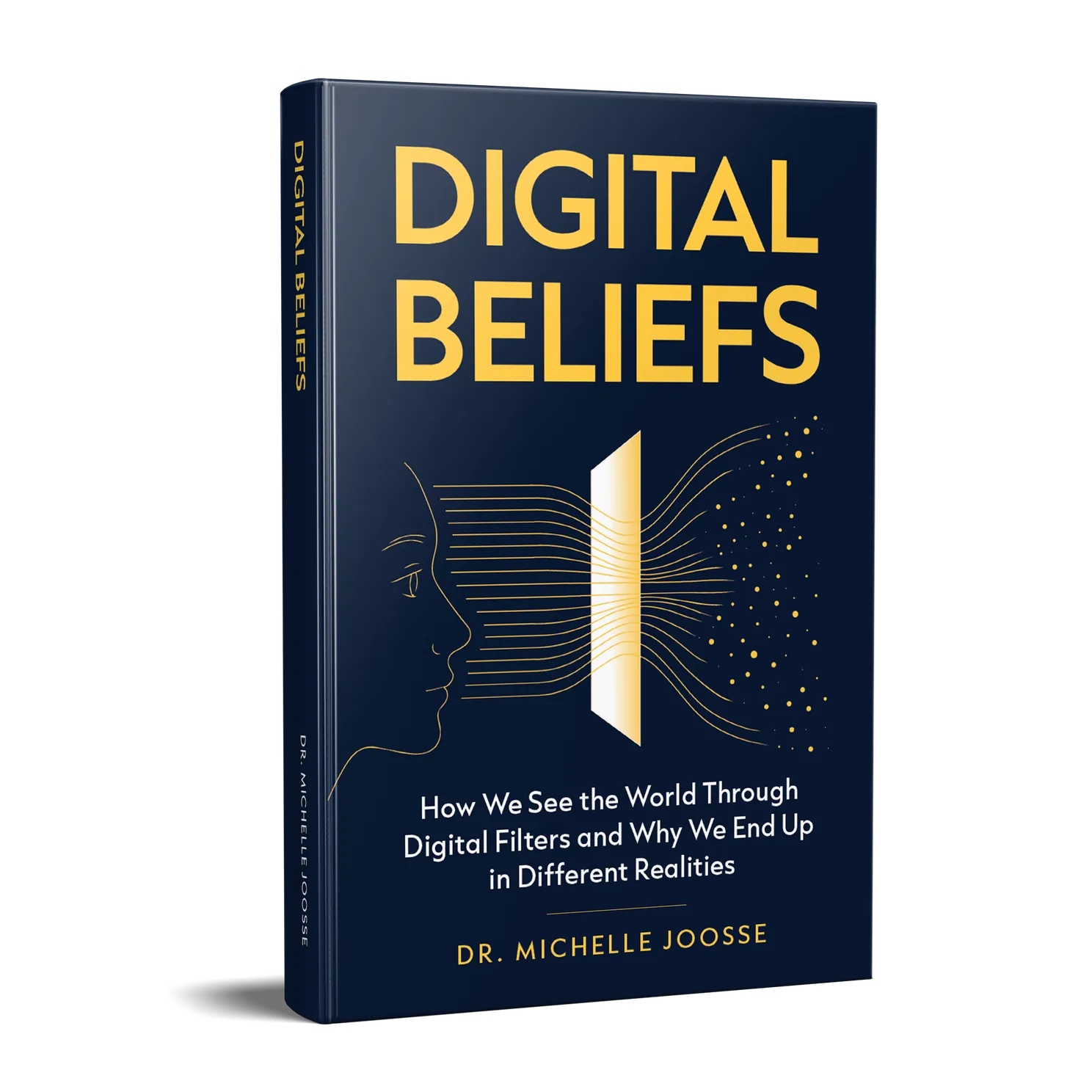
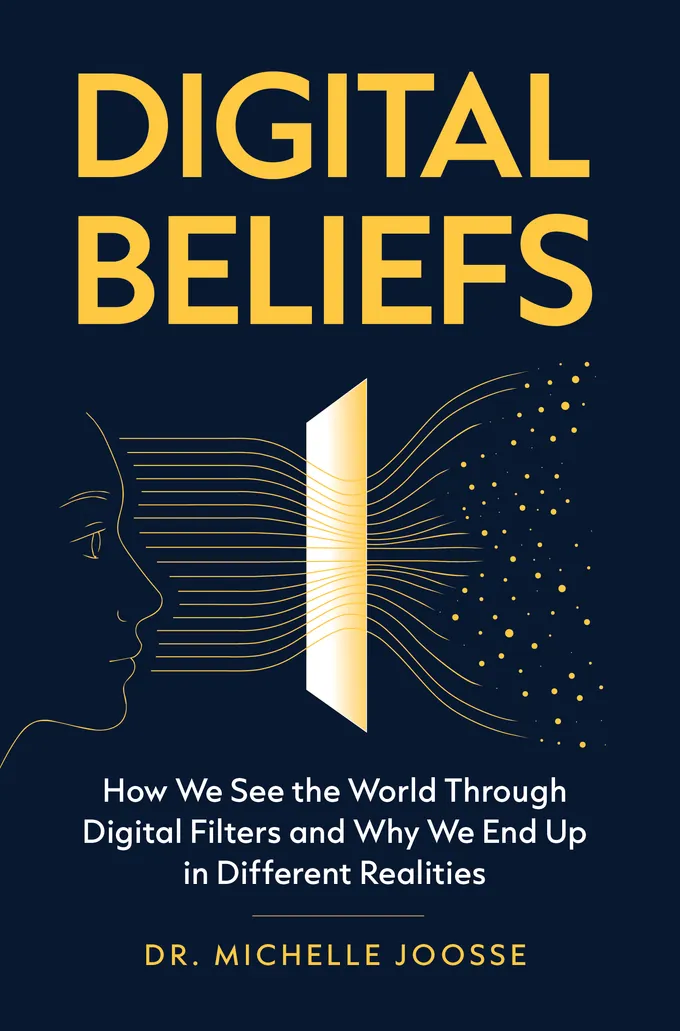
Digital Beliefs
How we see the world through digital filters and why we end up in different realities
Michelle began this research believing something that seemed straightforward: better evidence should lead to better decisions. The deeper she went, the more complicated the answer became.
Digital Beliefs helps readers understand why intelligent people can reach very different conclusions from the same information, recognise the hidden influences shaping their own trust decisions, and understand how cognition, identity, belonging and digital systems affect judgement.
But the most important thing Michelle wants readers to take from the book is not another collection of facts. It is awareness.
Awareness that our thinking is influenced. That certainty can feel more comfortable than curiosity. That the information reaching us is shaped by systems we may barely notice. And that sometimes the thinking most worth examining is our own.
The idea
What are digital beliefs?
Digital beliefs are shaped through the interaction between how we think, who we are and the information environments surrounding us.
The digital age did not create our desire for certainty, our need to belong or the cognitive shortcuts we use to navigate a complicated world.
Those tendencies are human.
Digital systems can amplify them.
Algorithms influence what reaches us. People who share our views are easier to find. Information confirming what we already believe becomes easier to encounter. Ideas repeated often enough can begin to feel true simply because they have become familiar.
The result is that intelligent, thoughtful and well-intentioned people can encounter the same information and reach very different conclusions.
Not because one person is rational and the other is not.
Because all of us are interpreting information through a combination of cognition, identity, experience and environment.
Read the full articleHow much of what you believe is shaping the decisions you make?
Our beliefs shape our decisions, but we are not always aware of what shapes our beliefs.
We tend to think we make decisions from facts, evidence and rational judgement. In reality, our thinking is also influenced by our identity, experiences, emotions, relationships and the digital systems determining what information we see and trust.
The problem is not simply a lack of information or critical-thinking skills. We interpret information through our own lens, often favouring what reinforces what we already believe and resisting what challenges it.
That can leave intelligent, capable people completely convinced they are right — while making decisions that are not necessarily supported by the best available evidence.
Better decision-making begins with recognising that none of us is immune.
What are digital beliefs?
Dr Michelle Joosse
Researcher. Business leader. Author. Advocate for better thinking.
For more than 30 years, Dr Michelle Joosse has worked across business leadership, finance, technology, governance and organisational transformation.
She has spent much of that career solving problems for organisations and the people they serve. But some of her most important discoveries came from recognising the assumptions, blind spots and beliefs she carried herself.
Her doctoral research began with a question she could not leave alone: why could intelligent people look at the same information and reach completely different conclusions?
What began as an investigation into other people's thinking eventually forced Michelle to examine her own.
That experience now sits at the centre of her work: helping people think more carefully, understand what influences their judgement and make better decisions in a world constantly competing for their attention and trust.
How do you decide what to trust?
Most of us can identify questionable thinking in someone else.
Recognising it in ourselves is harder.
Digital Beliefs repeatedly brings the reader back to one principle: awareness must become practice.
Michelle's research is not asking us to become sceptical of everything. It is asking us to create enough space between information and reaction to make a better judgement.
- Do you pause before reacting?
- Do you read beyond the headline?
- Do you look for information that challenges your existing view?
- Do you check more than one source?
- Do you ask why a particular piece of content reached you in the first place?
Self-check
How well do you navigate the digital world?
Take the five-question test.
Every day, we scroll through social media, news, messages and online content. But how often do we stop to think about why we're seeing something, how it's influencing us, or what might be missing?
Answer these five questions honestly. There are no right or wrong answers — this is about becoming more aware of how you engage with information.
What do your answers tell you?
Whether you answered Yes, No or I'm not sure, your responses are an opportunity to reflect on your information habits.
If you answered No or I'm not sure to any of these questions, you may have discovered an area where greater awareness could help you make more considered decisions.
And if you answered Yes to all five, ask yourself one more question: Do I consistently put these habits into practice, especially when the information challenges something I strongly believe?
Our beliefs influence what we notice, what we trust and how we make decisions. The challenge is recognising those influences in ourselves — not just in other people.
Want to understand more about what shapes your beliefs?
In Digital Beliefs, Dr Michelle Joosse explores how our thinking, identities, experiences and digital environments influence what we believe, whom we trust and the decisions we make.
Discover practical ways to question assumptions, look beyond your usual information sources and become more open to different perspectives.
Because better decisions don't just require better information. They require us to understand how we think.
Speaking
Digital Beliefs: Are you thinking for yourself?
Better decisions don't come from having more information alone. They begin when we become more aware of how we think, what we trust and why we believe what we do.
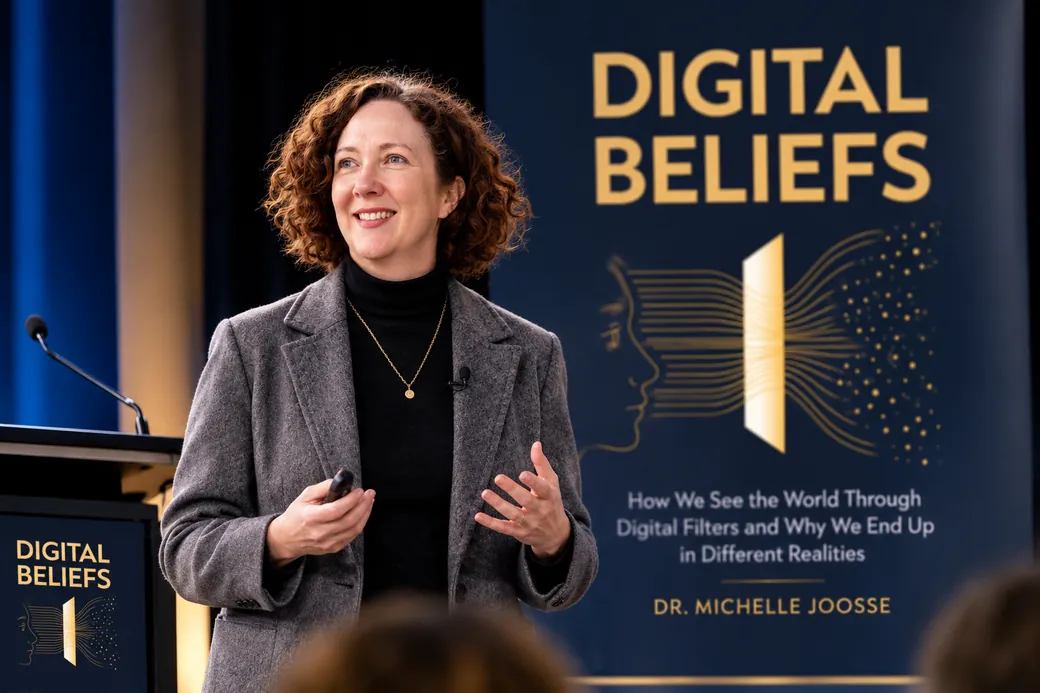
Dr Michelle Joosse brings the research and personal journey behind Digital Beliefs to audiences who make decisions in an increasingly complex information environment.
She explores why we trust some sources without question, dismiss others too quickly and sometimes become so certain of what we believe that we stop questioning whether we have it right.
Through relatable insights, practical reflection and her research, Michelle challenges audiences to look beyond the information in front of them and examine the lens through which they see it.
The result is not another lecture about misinformation. It is a much more personal conversation about judgement, assumptions, trust and where all of us can think better.
Have Dr Michelle Joosse at your next eventFor leaders
When does certainty become a business risk?
Leaders have to make decisions. Often quickly, with imperfect information and competing priorities.
The problem is not confidence. It is what happens when confidence becomes certainty and certainty stops us examining what might have changed.
Michelle has experienced these pressures from inside executive leadership. She understands the pressure to act, the desire to solve problems and the temptation to believe that more information or a stronger argument will resolve them.
She also understands how difficult it becomes to question a decision once time, money, effort or personal identity has become invested in it.
Her philosophy
Certainty is not the same as understanding.
Good judgement requires the confidence to make a decision — and enough intellectual humility to reconsider it when the evidence warrants it.
Questions about digital beliefs
Digital beliefs are shaped through the interaction between how we think, who we are and the digital environments influencing what information reaches us.
Because we do not interpret information in isolation. Our existing beliefs, experiences, identity, relationships and trusted sources all influence what feels credible.
Not necessarily. What matters is not only what information we receive, but how we evaluate it, what we trust and what we dismiss.
Yes. Changing our minds when the evidence warrants it is not necessarily a weakness. It can be a sign of sound judgement.
Dr Michelle Joosse speaks about Digital Beliefs, trust, decision-making and the influence our thinking, identity and digital environments have on what we believe and how we judge information.
What if the belief worth questioning is your own?
Dr Michelle Joosse began Digital Beliefs trying to understand why other intelligent people could see the world so differently. The research eventually brought the question back to herself.
“Better decisions don't begin with proving someone else wrong. They begin with being willing to question whether we might be wrong ourselves.”