Resources · Digital Beliefs
What are digital beliefs? The hidden lens shaping what you trust, share and decide
Two intelligent people can look at exactly the same information and come away convinced of completely different things.
An interview with Dr Michelle Joosse
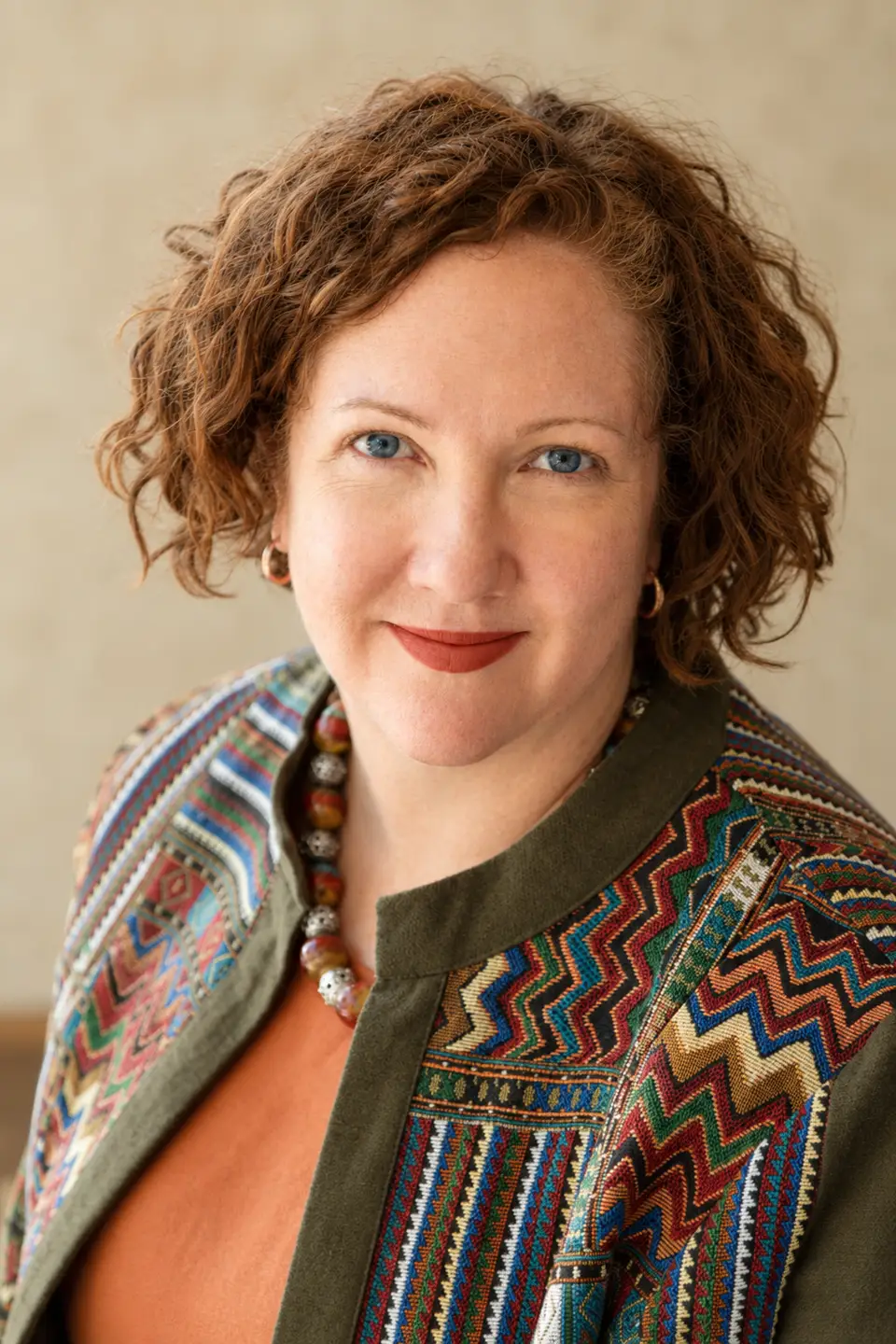
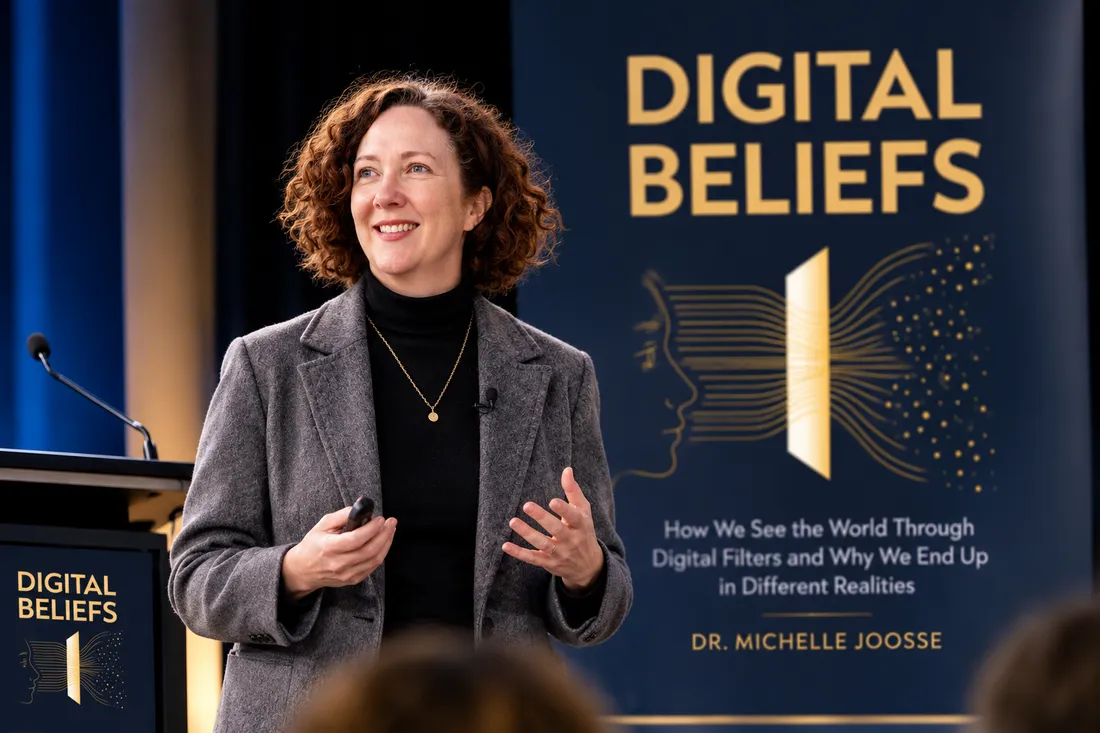
Her new book, Digital Beliefs: How We See the World Through Digital Filters And Why We End Up in Different Realities, explores a deceptively simple problem: if human beings have access to more information than at any previous point in history, why does agreement sometimes seem harder rather than easier?
Michelle's answer is that information is only part of what determines what we believe.
Between the information we encounter and the conclusions we reach sits a lens — built from our experiences, identity, relationships, cognitive biases, trusted sources and increasingly, the digital systems deciding which information reaches us in the first place.
That lens is the territory she calls Digital Beliefs. And understanding it may matter far beyond what we believe online. It affects the people we trust, the arguments we have, the information we share, the leaders we follow and some of the most important decisions we make.
“I think it's the lens that you use to look at everything.”
01
The question that changed Michelle Joosse's direction
Michelle did not originally set out to research digital beliefs. A former CEO and member of a CEO Institute Syndicate, she had developed an interest in Doughnut Economics and initially expected her research to move further into economics or the United Nations Sustainable Development Goals.
Then the pandemic changed the question. She watched people she knew, respected and loved become deeply divided over information that each side considered convincing. Longstanding relationships became strained. Institutions were questioned. Conspiracy theories competed with expert advice. People who had previously seemed to share a common reality appeared to be inhabiting different ones.
Why do people trust what they trust?
The manuscript opens with a related question: how can two intelligent people look at the same information and come away with completely different conclusions? From there, Michelle traces how trust influences our choices, relationships, leaders, news consumption and beliefs about the world. She argues that the digital environment has made this question more urgent because algorithms, social media, search engines and artificial intelligence increasingly mediate the information we encounter.
What eventually stood out to her was not simply disagreement, but trust: some people trusted particular institutions or sources and others did not. “That's when I sort of felt that it was about trust,” she said. That observation became the centre of her doctoral research.
02
What exactly are digital beliefs?
Digital beliefs are not simply opinions formed on social media. Michelle's argument is more sophisticated.
Human beings have always relied on mental shortcuts. We have always wanted certainty. We have always been influenced by our communities and wanted to belong. None of those tendencies was invented by Facebook, Google, TikTok or artificial intelligence. What digital systems have done is amplify them.
Algorithms can repeatedly expose us to information similar to what we have already engaged with. Social media can make people who share our views easier to find. Search can deliver information almost instantly. Repetition can make an idea feel increasingly familiar — and familiarity can begin to resemble credibility.
Michelle is careful not to turn technology into a convenient villain. Digital systems can, however, magnify those tendencies until they influence what we notice, what we trust and eventually what we believe. In an interview, she was similarly reluctant to label social media itself as “evil.” Her concern is the amplification mechanism: repeated content, personalised feeds and systems that continually learn what captures a user's attention.
Digital beliefs are ultimately a human problem occurring inside a technological environment.
“The digital age has not created our desire for certainty, our need to belong or the cognitive shortcuts we use to navigate a complex world.”
03
Three forces are operating at the same time
One of the central ideas in Digital Beliefs emerged when Michelle noticed that different academic disciplines were studying different pieces of the same problem. Psychology examined cognition and bias. Sociology examined identity, belonging and relationships. Media studies examined platforms, algorithms and information environments.
But people, she realised, do not experience those forces separately. They experience them simultaneously.
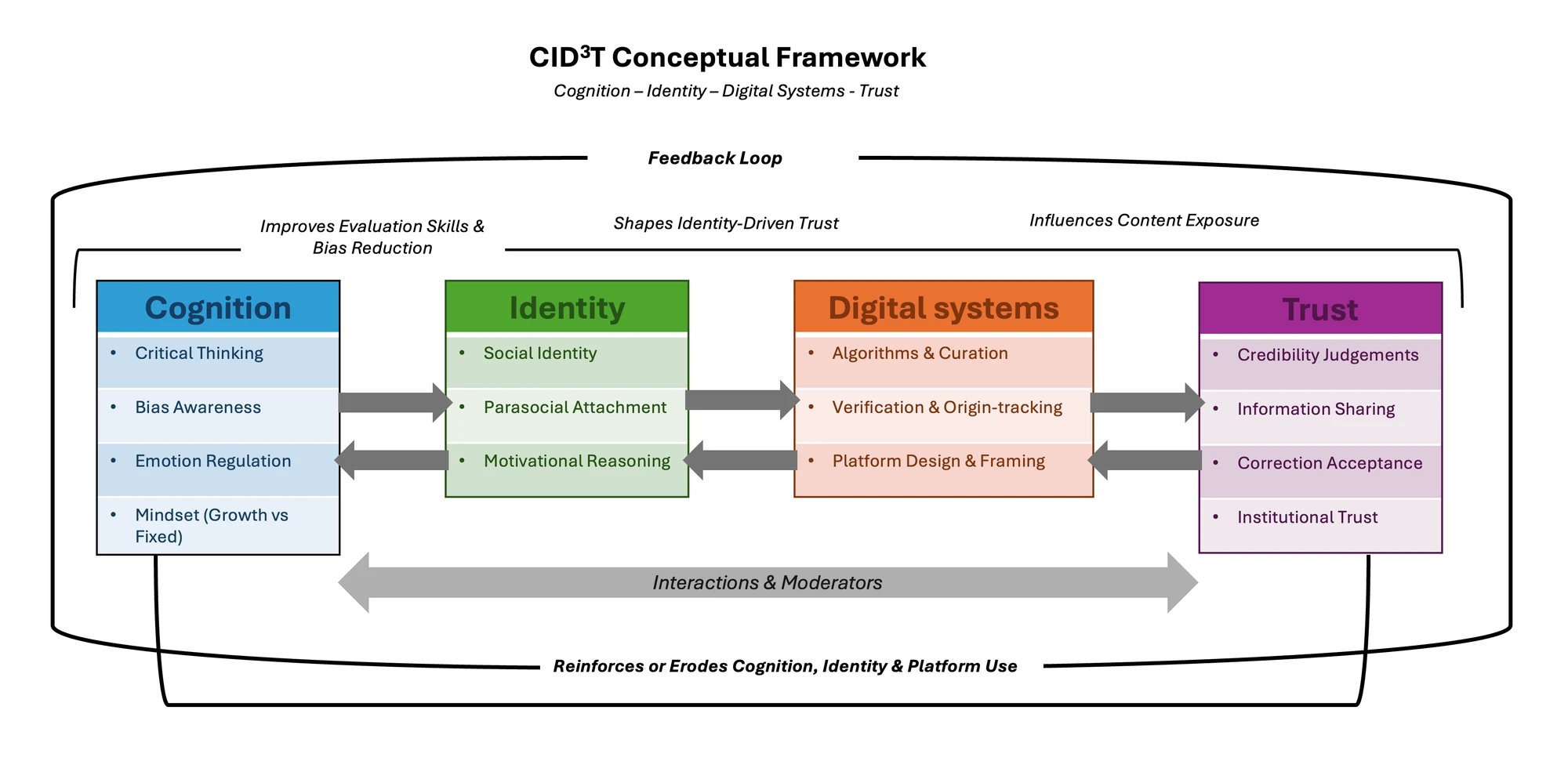
That insight led to Michelle's CID³T Framework — Cognition, Identity, Digital Systems and Trust.
In other words, trust is not simply a rational calculation based on evidence. The same evidence can produce different responses because it is being interpreted by different people, through different identities, inside different information environments. This explains a familiar modern experience: showing someone “the facts” and being stunned when nothing changes.
- Cognition
- How we think, interpret information and make judgements.
- Identity
- Who we are, what we value, our experience and where we feel we belong.
- Digital systems
- What information reaches us, what we encounter repeatedly and whose voices become prominent.
- Trust
- The outcome emerging from the interaction of those forces.
“We’ve always had our own ways of thinking, our beliefs and our need to trust people. But in the digital age, the platforms we use can magnify these things, influencing what we see, what we trust and ultimately what we believe.”
04
Why better evidence often isn't enough
Michelle began the research believing that better information would solve much of the problem. Give people stronger evidence, she assumed, and they would reach better conclusions. The research forced her to reconsider.
People can be presented with evidence contradicting a strongly held belief and still resist it. Sometimes the belief is connected to identity, community or belonging. Changing the belief can therefore feel like more than changing an opinion. It can feel like changing who you are, where you belong or which people you trust.
Michelle noted that contrary evidence can be rejected when accepting it would challenge an established identity or worldview. That is one reason she became increasingly interested in curiosity rather than confrontation. Her framework changes the question from “How do I change their mind?” to “How did they come to believe that?”
One begins with correction. The other begins with understanding. And then Michelle makes the move that gives Digital Beliefs much of its credibility: she turns the question back on herself.
“It's very uncomfortable for people to change their mind.”
05
The researcher discovered she was inside the experiment
Michelle originally approached the subject partly because people close to her believed things she considered wrong. She wanted to understand why. At one stage, as she describes it, there was also a desire to prove them wrong.
Then the research became uncomfortable. The cognitive biases she could recognise in other people were operating in her too.
The tendency to favour confirming evidence? Hers too.
Trusting familiar sources? Hers too.
Resistance to information challenging an existing position? Again, hers too.
Her book describes the shift clearly: she stopped asking, “Why can't they see the truth?” and began asking how all of us are influenced by forces we barely notice. That was the point, Michelle says, when the project stopped being purely academic. It became personal. The research forced her to “look in the mirror” and examine her own assumptions, experiences and the lens through which she was making sense of the world.
This is also where her mission diverges from much of the public conversation about misinformation. She is not trying to identify the stupid people. She is not trying to tell readers what political opinions to hold. And she is not promising immunity from bias.
“I thought I was researching why other people believed what they did. What I discovered was that I wasn’t immune — my own beliefs were shaping what I trusted, what I questioned and what I believed to be true.”
06
Digital beliefs don't stay online
The term “digital beliefs” can sound like a technology issue. Michelle sees it as a life issue.
Beliefs influence whom we trust, what we buy, how we raise children, what information we share, how we judge strangers and how we behave inside organisations.
Judgement. Years before completing the PhD, Michelle took part in the Vinnies CEO Sleepout. She had grown up with assumptions about homelessness that she later recognised had been shaped partly by her environment and upbringing. Meeting people whose homelessness had followed domestic violence, bereavement and financial crisis complicated the simple explanations she had carried. “I thought my perception needed to change,” she recalled. The experience contributed to her move from the commercial world into the social sector.
Family. Her research has changed how she responds when her children bring her something they have seen in the news. Instead of immediately agreeing or disagreeing, she tries to pause. Where did that information come from? Have you checked whether it is accurate? What else might be true? She has also had to learn to listen more — something she admits does not always come naturally.
Business. Michelle points to organisations that continue pursuing a decision long after evidence suggests it is not working because so much money, reputation, effort or personal conviction has already been invested. In those situations, changing your mind can feel like admitting failure. Yet scientists revise conclusions when evidence changes. Leaders, she argues, should be able to do the same. Being wrong once does not require remaining wrong forever.
“The beliefs we form online don’t stay online. They shape who we trust, how we see the world and the decisions we make. And sometimes, familiarity makes us less likely to question the people we trust most.”
07
The digital environment makes familiarity powerful
One of the more practical observations in Michelle's work concerns repetition.
Imagine someone encounters an opinion once. It is simply an opinion. Then they encounter it again. And again. Perhaps several people they respect repeat it. Perhaps an influencer they identify with endorses it. Perhaps their social feed continues presenting similar claims.
Repeated exposure begins doing psychological work. Michelle describes the process as one way an opinion can harden into conviction.
The user may feel that independent sources are confirming the idea without recognising that algorithmic personalisation helped create the repetition in the first place. The implication is uncomfortable because the resulting information environment does not feel artificial.
It feels like reality.
That is why Michelle encourages people to deliberately seek information that sits on the other side of what they already believe rather than assuming repeated exposure equals independent verification. “If you actively go try to seek alternative views, you will be able to find them,” she said.
08
The pause may be more powerful than another fact
Michelle's mission is surprisingly modest. She does not expect every reader to become an expert in cognitive psychology or algorithmic systems. She wants them to become more aware.
Asked what she wanted the book to change in a reader, her answer was practical:
- Be more open to opposing views.
- Check and evaluate information before sharing it.
- Pause before reacting — rather than acting first and thinking afterwards.
The book is designed to help readers recognise cognitive biases, understand the role of identity and belonging, see how algorithms and digital platforms influence what feels credible, and respond more deliberately to information and uncertainty. But the most important outcome is not another set of facts.
It is awareness.
Awareness that our thinking is influenced. That certainty can feel safer than curiosity. That information reaching us may have been selected by systems we do not notice. And that occasionally the person whose thinking needs the most examination is ourselves.
“Pause before you trust, question before you share, and stay open to views that challenge your own. Not everything that feels true is true.”
09
Her mission is not to tell people what to believe
This may be the most important distinction in Michelle's work.
Digital Beliefs is not a manual for winning arguments. It is not about becoming sceptical of everything. And it is not about finding a clever technique for fixing people who disagree with us.
Michelle's ambition is more human. She wants people to be able to encounter disagreement without immediately dismissing one another — curious enough to examine information before sharing it, confident enough to make decisions, and intellectually humble enough to reconsider those decisions when better evidence emerges.
Her personal motivation is equally direct. The author profile describes her ambitions as being a great mother and leaving the world “a little better than she found it.” She hopes readers become more aware of what shapes their thinking and more willing to pause before certainty becomes a decision.
That mission is visible in the way she talks about her children, her parents, leadership and her own mistakes.
“Digital Beliefs taught me that none of us is immune to getting it wrong. My hope is that we learn to question what we trust, think before we share, and stay open to changing our minds. Because better thinking leads to better decisions.”
10
One question before you decide
Near the end of her second interview, Michelle was asked to reduce the idea to a single question. If someone encountered something that felt obviously true, what should they ask themselves before accepting it?
Am I confident that I have enough information to support this belief — or is my existing belief driving my conclusion?
It is a small question with surprisingly large implications. For a leader, it may change a strategic decision. For a parent, it may change a conversation. For a team, it may create room for a dissenting voice. For someone scrolling through a feed, it may be the difference between automatically sharing something and stopping long enough to investigate it.
The challenge of the digital age is not simply determining what is true. It is understanding how we came to believe something was true in the first place.
We may never remove the lens. But we can become more conscious that we are looking through one.